Destinations
Death Valley National Park Trip Guide
Plan a Death Valley trip around extreme heat safety, the best cool-season timing, key sights like Badwater Basin, and realistic driving distances.
Death Valley is the hottest, driest, and lowest national park in the country, and that combination should set the terms of your visit more than any single sight on the list. Summer ground temperatures can exceed 200°F, air temperatures regularly clear 120°F in July, and heat-related deaths happen here most years, including to well-prepared hikers and motorcyclists. Timing this trip correctly matters more than in almost any other park in this guide.
The park is also huge — over 3 million acres, the largest national park in the contiguous US — with sights spread across long, empty drives. Two to three days is a reasonable first visit, built around driving rather than hiking distance.
Organize the park into drive-based zones
- Badwater Basin corridor: the lowest point in North America, Artist's Palette, Devil's Golf Course, and Zabriskie Point, all reachable from a single scenic drive south of Furnace Creek.
- Furnace Creek area: the park's services hub — visitor center, lodging, and the shortest drives to major sights.
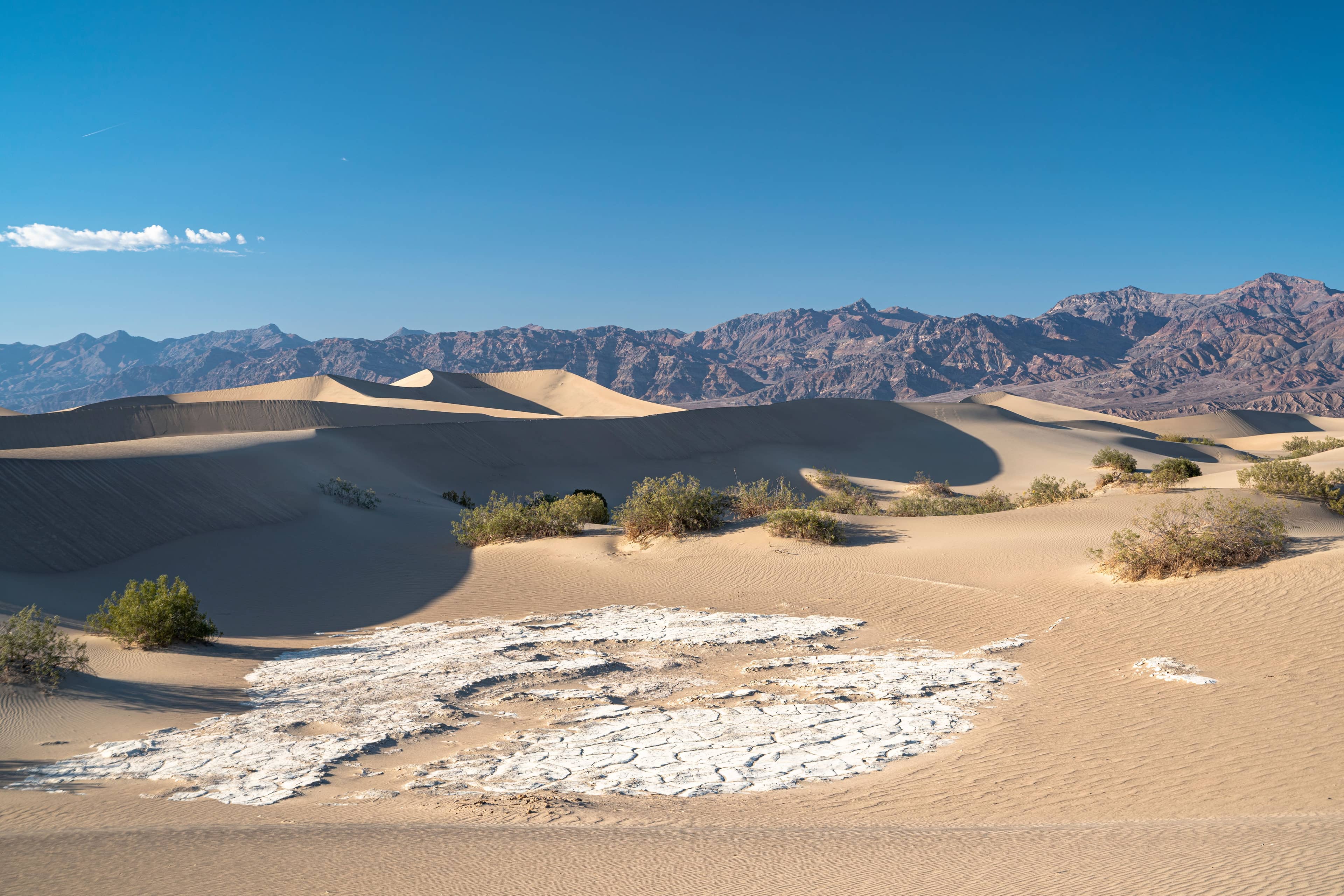
- Mesquite Flat Sand Dunes and Stovepipe Wells: dune photography, especially at sunrise or sunset.
- Scotty's Castle / Ubehebe Crater area (north): a longer drive, best added only with extra time or a specific interest.
Plan drives generously — distances that look short on a map can take longer than expected on desert roads with wide temperature swings and, in places, no cell coverage.
The park's scale is genuinely hard to grasp until you're driving it — at over 3.4 million acres, Death Valley is larger than the state of Connecticut, and its major sights sit an hour or more apart by paved road. First-time visitors sometimes plan a Death Valley day the way they'd plan a day at a smaller park, expecting to hit five or six stops; two or three well-chosen stops with time to actually experience each one is a more realistic target.
A realistic two-to-three-day itinerary
Day 1: Badwater Basin corridor
Drive the Badwater Road sights in one sweep: Zabriskie Point (great early morning light), Artist's Drive and Artist's Palette, Devil's Golf Course, and Badwater Basin itself. Time outdoor stops for early morning or late afternoon outside of summer heat.
Day 2: Dunes and Furnace Creek
Visit Mesquite Flat Sand Dunes near sunrise, when temperatures are lowest and light is best, then spend the warmer midday hours at the Furnace Creek Visitor Center or another air-conditioned stop before a late-afternoon or evening activity.
Day 3 (optional): Northern park or a scenic drive
If time and season allow, add Ubehebe Crater or another northern-park drive. This is also a sensible day to simply slow down — Death Valley rewards patience with light and landscape more than a packed checklist.
Extending further
Beyond three days, consider Dante's View, a high-elevation overlook giving a completely different perspective on the valley floor below, or a stargazing evening — Death Valley holds Gold Tier International Dark Sky Park status, among the darkest skies accessible in the contiguous US, and a clear moonless night here is genuinely spectacular.
When to go — this decision matters most
Visit between October and April. Daytime highs in that window run comfortable to warm rather than dangerous, and most trails are genuinely hikeable. Avoid summer (roughly May through September) unless you're specifically experienced with extreme desert heat and sticking to short, air-conditioned-adjacent stops — even locals limit outdoor exposure in July and August.
Heat and vehicle safety — the park's real hazard
The National Park Service recommends about one gallon of water per person per hour of outdoor activity in summer heat, and advises against hiking after roughly 10 a.m. in the hot months — heatstroke can develop within minutes at peak temperatures. Motorcyclists face particular risk since there's no enclosed cabin or air conditioning; the park has specifically warned riders to avoid summer travel.
A vehicle breakdown on a remote dirt road in extreme heat is a life-threatening emergency, not an inconvenience — carry extra water, tell someone your route, and don't rely on cell service, which is spotty to nonexistent across most of the park. Stick to paved or well-maintained roads unless your vehicle and experience genuinely suit backcountry routes.
Sun exposure compounds the heat risk even for visitors who feel fine — wear a wide-brimmed hat, sunglasses, and sunscreen, and reapply regularly during any time outdoors. Children and pets are especially vulnerable to heat; never leave a pet in a parked vehicle here even briefly, since interior temperatures climb to lethal levels within minutes. Flash floods are also a real, if less obvious, hazard: this is one of the driest places on Earth, but the rare storms that do occur can send fast-moving water through narrow canyons with little warning, so check weather forecasts before hiking any canyon route.
Lodging
Furnace Creek is the main in-park hub, with a range of lodging from basic to resort-style, plus a smaller option at Stovepipe Wells. Book well ahead for the cool-season months when demand peaks, since in-park capacity is limited. Gateway towns like Pahrump, Nevada, or Lone Pine, California, offer alternatives if in-park lodging is full, at the cost of a longer daily drive.
A first-timer's booking sequence
Lock in cool-season dates first — this is the one decision that most affects safety and enjoyment. Book Furnace Creek or Stovepipe Wells lodging early for peak winter weekends. Plan each day's drive with generous fuel and water margins, and check current road conditions, since flash flooding can close roads with little warning even outside the hottest months.
Before you travel, recheck the season-appropriate heat advisories, fuel station locations and hours (limited inside the park), and any flash-flood or road-closure alerts.
Las Vegas is the most common airport gateway, roughly two hours from Furnace Creek, which makes Death Valley a realistic add-on to a Las Vegas trip if your dates fall in the cool season — worth mentioning to your travel planner early if that's part of the appeal.
Pairing with Joshua Tree
Both are classic California desert parks and pair well on a longer Southwest itinerary — see our Joshua Tree National Park guide for a park with a very different desert character, less extreme heat risk, and its own iconic rock formations.
Let Ben time it right
Timing is everything in Death Valley, and it's exactly the kind of detail Ben builds into every itinerary. Request a complimentary custom-trip quote, and we'll make sure your dates land in the comfortable season, not the dangerous one. More on our national parks travel style page.