Who’s Cruising
Accessible Cruising: A Complete Guide for Travelers with Disabilities
How to plan an accessible cruise: staterooms, mobility equipment, tender ports, Deaf and hard-of-hearing, blind and low-vision, sensory, dementia, medical and service-animal needs.
A cruise takes much of the work out of travel. Your stateroom, meals, entertainment and a medical center all travel with you, and every major cruise line has a team whose job is arranging accessibility on every sailing. For many disabled travelers and the people they travel with, that makes cruising one of the easiest ways to see several places in a single trip.
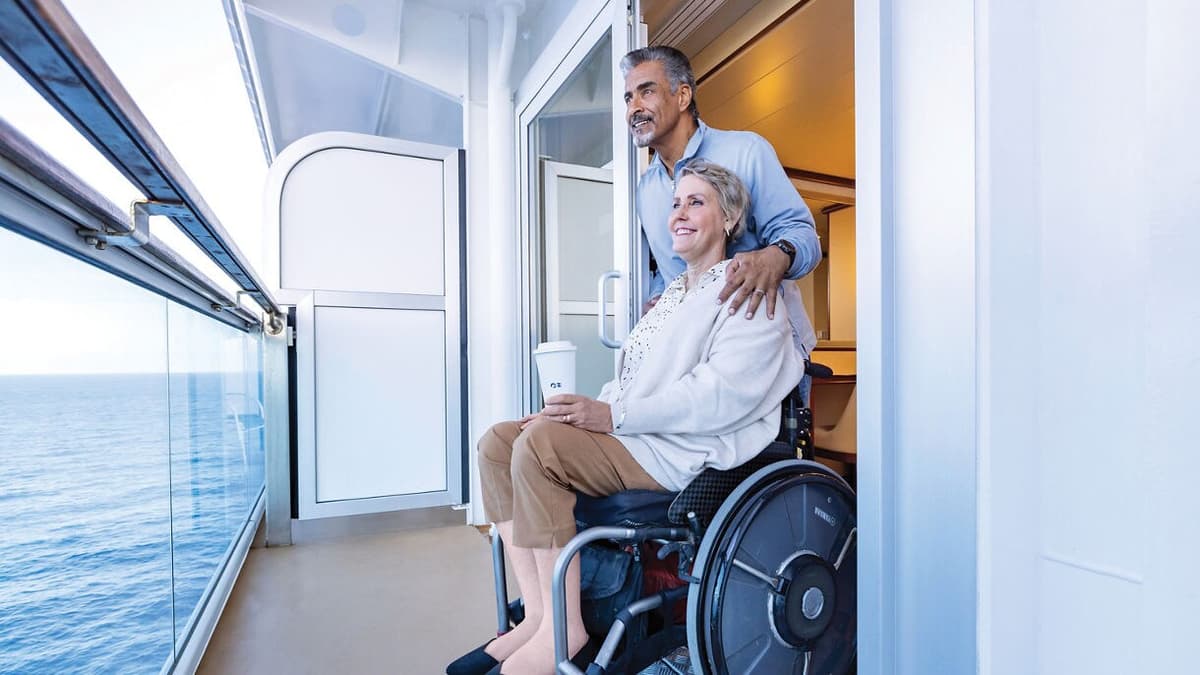
Access still varies by ship, stateroom and port, and those details decide whether a trip works for you. This guide covers what cruise lines offer, where the real limits are, and how we plan around them. Policies change, so we confirm the current rules for your ship and sailing before you book.
Why cruising works well for many disabled travelers
- You unpack once. No hotel changes, no hauling luggage between cities, and no hunting for a new accessible room every night.
- Elevators reach every passenger deck, and newer ships are built with wider corridors and accessible public spaces.
- Accessible features come standard. Many ships have accessible staterooms, pool lifts, assistive listening systems and Braille signage.
- You set the pace. Sea days are for resting, and on port days you can go ashore or stay aboard.
- Medical care is on board. Every large ship has a medical center with doctors and nurses. It isn't free, so read the insurance section below.
None of this makes every ship or port fully accessible. What it does mean is that most barriers can be identified before you book, and that's what good planning is for.
Start with your access profile
You know your needs better than any brochure. Before we compare ships, write down what helps you, what gets in your way and what you can't do without:
- your mobility device (manual chair, power chair, scooter or rollator), with its width, length and weight;
- transfer and bathroom needs, such as a roll-in shower, a shower bench, a particular bed height or clear space beside the bed;
- how far you're comfortable walking or wheeling, and how often you like to rest;
- hearing, vision or communication needs;
- sensory needs or routines;
- medical equipment or treatment, such as oxygen, CPAP, dialysis or refrigerated medication;
- a service animal;
- who's traveling with you and what support, if any, they provide.
Share only what's needed to request the right accommodations. We'll use your list to choose the ship, stateroom and itinerary with you.
Accessible staterooms and how to book them
Most lines offer two main types of accessible stateroom:
- Fully accessible (wheelchair-accessible) staterooms have wider doorways, level or ramped thresholds, room to turn a wheelchair, and a roll-in shower with grab bars, a fold-down seat and a handheld showerhead.
- Ambulatory accessible staterooms are for travelers who walk but benefit from grab bars and fewer obstacles. They usually don't have the turning space of a fully accessible room.
Royal Caribbean, for example, says its accessible staterooms range from 159 to 298 square feet. They have a five-foot turning radius in the bathroom, sleeping area and seating area, as well as roll-in showers, fold-down shower seats, lowered sinks, and closet rods and safes you can reach from a seated position.
Before you book, keep these in mind:
- There aren't many of them. Accessible staterooms are a small share of any ship's cabins, and the popular categories and holiday sailings sell out first. Start looking as soon as your dates are firm.
- You usually don't need proof of disability. Royal Caribbean doesn't ask for medical certificates or disability placards. Instead, you complete its Guest Special Needs Form confirming that you need the room. Other lines use similar forms.
- "Accessible" isn't one standard layout. We ask about bed height, shower type, the balcony threshold and the distance to the nearest elevator, and we get the answers in writing.
- A standard stateroom might be all you need. If you don't need a roll-in shower or turning space, a standard stateroom near an elevator could work, and it leaves the accessible room for someone who needs it.
Wheelchairs, scooters and getting around the ship
You can bring your own equipment or rent it. Companies such as Scootaround and Special Needs at Sea deliver scooters, wheelchairs and other equipment straight to your stateroom and collect it at the end of the cruise.
- Measure first. A scooter has to fit through your stateroom door and be stored inside the room, because lines generally don't allow mobility devices to be parked in corridors.
- Get help at the terminal. Cruise lines provide wheelchair assistance for boarding and leaving the ship, and Royal Caribbean offers complimentary wheelchairs for both. It's worth asking for even if you don't use a wheelchair every day, because terminals involve long distances and lines.
- Expect the gangway to change. Gangway angles shift with the tide, and some ports have steep ramps or stairs. Crew may use a different exit or a stair-climbing device.
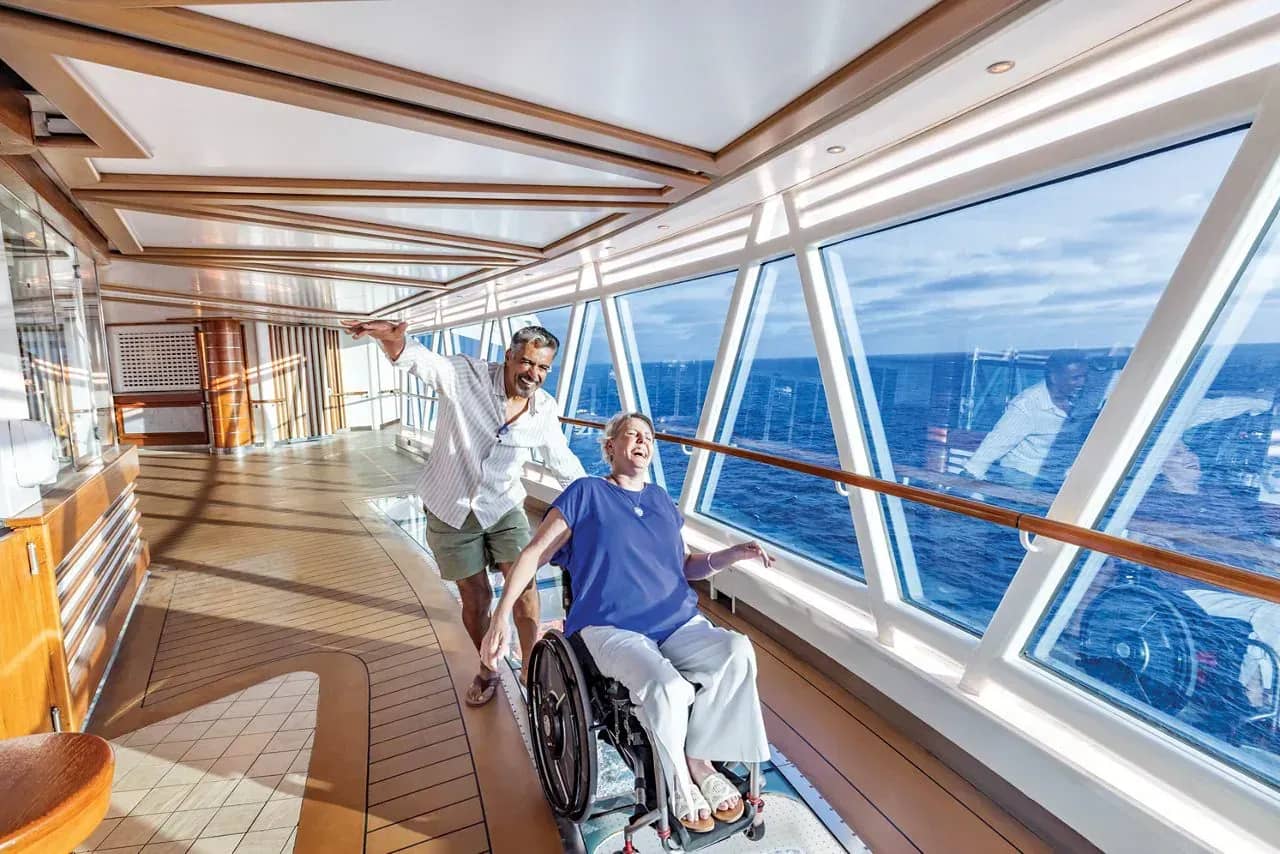
- On board, look for pool and whirlpool lifts, accessible theater seating, lowered guest services counters and, on Royal Caribbean, lowered casino tables.
Tender ports: check these before you book
Not every port has a pier. At some ports, the ship anchors offshore and small boats called tenders carry guests to land. Tendering is where cruise accessibility is most limited, so it's the first thing we check on any itinerary.
- Boarding a tender can involve steps, a gap between two moving boats, and a pier ashore that may not be accessible.
- Motorized devices often can't board tenders. Royal Caribbean allows power wheelchairs and scooters on a tender only when roll-on access is available, and says roll-on access isn't guaranteed.
- Crew can only lift so much. Princess says its crew won't individually lift more than 50 pounds. It won't move a guest using a mobility device into or out of a tender if that would take more lifting.
- Holland America offers roll-on tender access on most ships. Every Holland America ship except Volendam and Zaandam has elevators down to the tender platform, so guests can roll directly onto it. Crew won't carry wheelchairs or scooters that weigh more than 100 pounds without the battery, and wind, swells or tides can still make boarding unsafe.
- The captain makes the final call based on weather and sea conditions that day. Princess notes there's no refund for a port you can't visit.
- A port can switch from docking to tendering at short notice, for example when several ships are in port at once.
Before you book, we list every scheduled tender port, favor itineraries where the ship docks, and help you decide whether a tender day is worth planning around. Many guests are happy to stay aboard on tender days, when the pools, spa and restaurants are at their quietest.
For each line's rules in detail, see cruise tender ports with a wheelchair or scooter.
Companions and personal care
Crew members help with things like boarding assistance and getting oriented, but cruise lines generally don't provide personal care such as help with dressing, bathing or transfers. If you have that support at home, plan for a companion or personal care assistant to travel with you. Princess, for example, strongly recommends that guests who use mobility devices travel with someone who can help, both onboard and ashore.
Deaf and hard-of-hearing travelers
- Room kits provide visual and vibrating alerts for the smoke alarm, a knock at the door and your wake-up alarm. Carnival's kit includes a bed shaker, door-knock and smoke alerts, a TTY and a phone amplifier.
- Shows: Royal Caribbean has assistive listening systems in its main theaters. Carnival offers amplification headsets at Guest Services.
- Captions: Stateroom TVs and some programs offer closed captioning.
- Sign language interpreters: Royal Caribbean provides ASL interpreters when you request one at least 60 days before sailing. Carnival also asks for 60 days' notice and says it will make reasonable efforts to find an interpreter on shorter notice.
- Emergency alerts: Ask how the crew will reach you during an emergency announcement. We note your hearing needs on your booking so the ship knows in advance.
Blind and low-vision travelers
- Braille and audio cues: Royal Caribbean has Braille on stateroom signs, on handrails in public stairways and on elevator buttons, and its elevators give audio signals.
- Large print: Restaurant menus and daily activity schedules are available in large print.
- Orientation tours: Crew can show you around on boarding day. Ask early, before the ship gets busy.
- The cruise line's app: If you use a screen reader, try the app before you sail to see whether the daily schedule and reservations work for you, and ask for large-print schedules as a backup.
- Service dogs are welcome. See the service animal section below.
Autistic travelers and sensory needs
A cruise can work well for autistic travelers and people with other sensory or processing differences. You unpack once, the daily schedule is published ahead of time, and your stateroom is always there when you need a break.
- Autism on the Seas: Royal Caribbean works with Autism on the Seas to offer priority check-in and departure, dietary accommodations and personal assistance for families. The line also supports the dedicated group cruises that Autism on the Seas runs during the year. Royal Caribbean's Adventure Ocean youth program includes sensory-friendly films, games and toys.
- Choose a quiet stateroom. Rooms under the pool deck, above the theater or near nightclubs can be noisy. We'll steer you toward calmer locations.
- The safety briefing is shorter now. Most major lines use a digital safety briefing you watch on your phone or stateroom TV, followed by a quick check-in at your assembly station, instead of a long, crowded drill.
- Preview the ship. Deck plans, photos and ship videos can help everyone know what to expect.
- Avoid the crowds. We can suggest check-in times and dining arrangements that skip the busiest periods. Noise-canceling headphones help on the pool deck and at shows.
There's more in our guide to autism-friendly cruising.
Travelers living with dementia
The Alzheimer's Association says that living with dementia doesn't mean giving up meaningful activities like travel, but travel does take planning. A cruise has real advantages: one room for the whole trip, no packing up each day, and meals and rest always close by.
A large ship is also a busy, unfamiliar place, with long corridors that look alike, open decks and a new port most days. The Alzheimer's Association notes that a change of environment can trigger wandering or confusion. Whether a cruise is right depends on the person, so talk it through with them, their doctor and the rest of the family.
If you decide to go:
- Start short. A three- to five-night sailing from a nearby port keeps flights and changes to routine to a minimum.
- Keep home routines. Choose dining times that match mealtimes at home and leave plenty of time to rest. The Alzheimer's Association advises against over-scheduling.
- Choose an easy-to-find stateroom, close to an elevator or a distinctive landmark.
- Think about the balcony. If nighttime confusion is a concern, we can talk through whether a balcony stateroom is the right choice.
- Tell the ship. Let the cruise line's accessibility team and your stateroom attendant know, confidentially, so they can help.
- Carry ID. The person should carry or wear identification with the ship's name, the stateroom number and a companion's phone number. Keep a recent photo of them on your phone. The Alzheimer's Association also suggests considering a wandering response service, and its 24/7 Helpline (800-272-3900) can explain the options.
- Stay together ashore. Guest cards are scanned at the gangway, which records who is on board but doesn't stop anyone from walking off the ship.
- Plan breaks for the caregiver. It's your vacation too.
There's more in our guide to cruising with dementia.
Oxygen, CPAP, dialysis and medications
- Oxygen: Arrange it through a supplier and tell the cruise line the type, the quantity and the delivery schedule. Celebrity, for example, permits all types of oxygen cylinders, and depending on the ship you may keep them in your stateroom. If you use a portable oxygen concentrator, bring enough batteries for full days ashore.
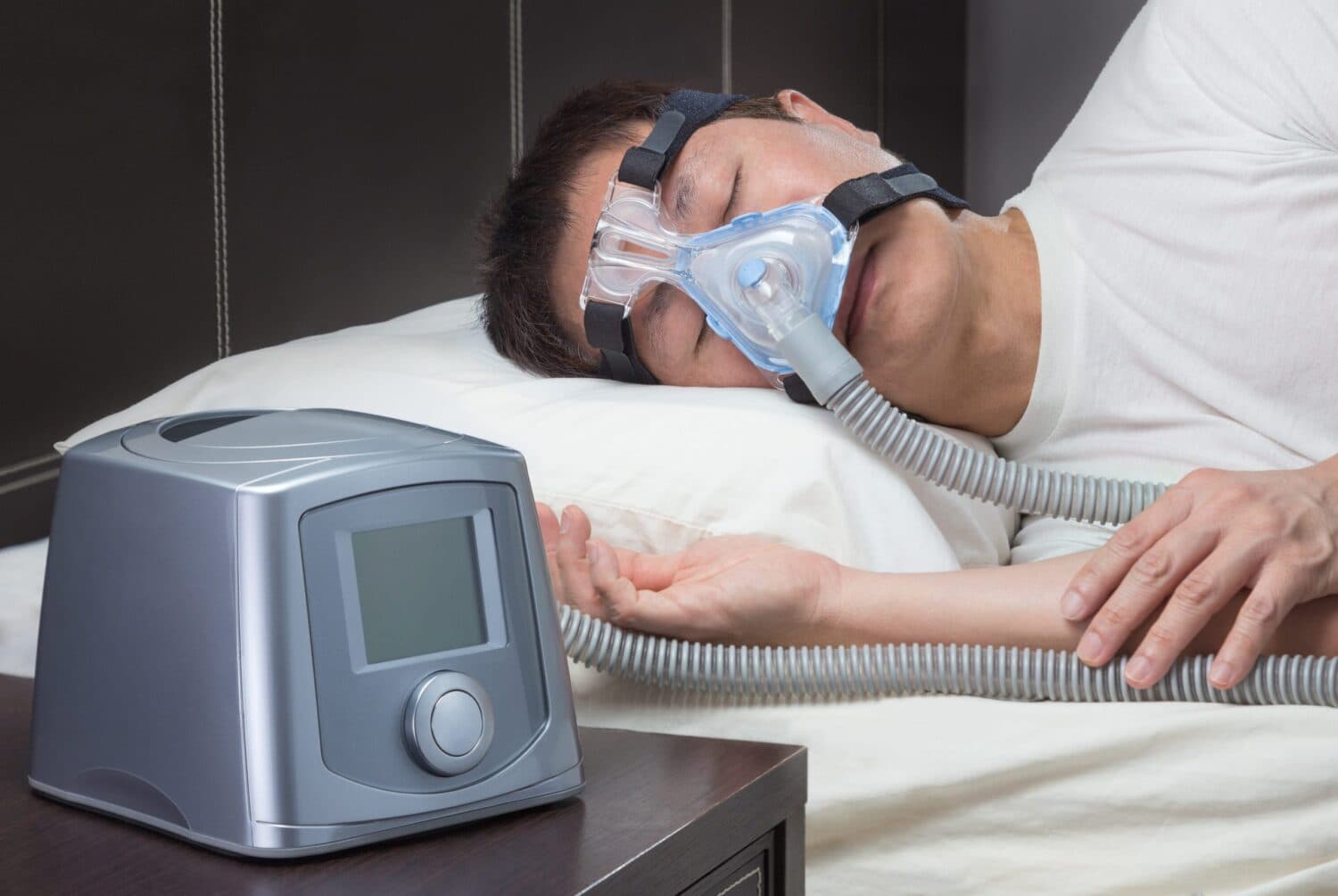
- CPAP and BiPAP: Some lines don't require notice, but telling the line in advance is how you arrange extras like distilled water. Surge protectors aren't allowed on most ships, so ask whether there's an outlet near the bed or whether the ship can provide an approved extension cord. Ask about distilled water too. Some lines provide it, and others let you bring your own.
- Dialysis: Celebrity welcomes guests on continuous ambulatory peritoneal dialysis (CAPD) and allows self-administered hemodialysis under certain conditions. For hemodialysis with medical staff, Dialysis at Sea operates on select Royal Caribbean and Celebrity sailings, with a nephrologist and dialysis nurses on board. Those sailings are limited, so plan early.
- Medications: Pack them in your carry-on, in their original containers, with a few extra days' supply. Ask the line about refrigeration, which is usually a stateroom refrigerator or storage in the medical center, and ask for a sharps container if you need one.
- Medical diets and allergies: Tell the line when you book so the dining team can prepare.
For more detail, see our guides to cruising with oxygen, cruising with a CPAP or BiPAP and cruising on dialysis.
Medical care on board and travel insurance
Each ship's medical center is staffed by doctors and nurses, with set clinic hours and emergency care around the clock. It's set up for urgent care and stabilization, not hospital treatment, and serious cases may need to be taken ashore.
- You pay for care on board. Visits are billed to your onboard account, and many U.S. health plans either treat the ship's doctor as out-of-network or don't cover care outside the United States.
- Medicare covers very little at sea. Medicare Part B may pay only if the doctor is legally allowed to provide care on the ship and the ship is in a U.S. port or no more than six hours from one.
- Medical evacuation is expensive. Evacuation from a ship or a foreign port can cost more than $100,000.
That's why we recommend travel insurance with strong medical and evacuation coverage for every cruise. If you have a pre-existing condition, look for a policy with a pre-existing condition waiver. Waivers usually require you to buy within a short window after your first trip payment. We'll help you compare options.
Service animals
- Service dogs yes, emotional support animals no. Trained service dogs are welcome on major cruise lines, but emotional support animals aren't accepted. Carnival, Norwegian and Princess all follow the U.S. Department of Justice definition of a service animal.
- Start early. Carnival asks for at least 14 days' notice and Norwegian at least two weeks. The bigger job is meeting each port's animal entry rules, which can require vaccinations, health certificates or permits, and some take months.
- Check each port. If your dog can't go ashore at a port, you'll usually stay aboard that day too, so we check the rules for every port before you book.
- Ask about the relief area. Lines set up a relief area on board. Ask where yours will be.
- Tell the shore excursion team so your tours can accommodate your dog.
For port entry permits and the CDC's rules for returning to the U.S., see cruising with a service dog.
Chronic illness, pain and fatigue
Many disabilities aren't visible, and cruise ships are big. The largest are more than 1,100 feet long.
- Book a midship stateroom near the elevators.
- Ask for wheelchair assistance at the terminal, even if you don't use a wheelchair day to day.
- Consider renting a scooter or wheelchair for the ship even if you only need one some of the time.
- Use sea days to rest, and choose excursions with an activity level you know works for you.
Shore excursions
- Activity ratings: Cruise lines rate excursions by activity level, and some offer tours in lift-equipped vehicles. Royal Caribbean has a dedicated accessible shore excursions team.
- "Easy" can still mean cobblestones, steep streets or steps. Ask how far you'll walk, how many steps there are, what the vehicle is and whether there's an accessible restroom.
- Independent accessible tours: In many ports, local companies offer lift-equipped vans and guides who know the step-free routes. We can arrange these for you.
- Private islands: Cruise line private islands are often among the most accessible stops. Royal Caribbean's Perfect Day at CocoCay has a pier, paved paths, an accessible tram, and attractions with sloped or lift entry. Beach wheelchairs are available first come, first served.
- Staying aboard is always an option. The pools, spa and restaurants are at their quietest on port days.
Notice deadlines at a glance
- Accessible stateroom: as soon as your dates are firm
- Travel insurance with a pre-existing condition waiver: shortly after your first payment
- Physician-assisted dialysis: as early as possible, because sailings are limited
- Sign language interpreter: 60 days before sailing (Royal Caribbean and Carnival)
- Special equipment or services: 30 days before sailing (Royal Caribbean)
- Service animal: at least 14 days (Carnival) or two weeks (Norwegian), but start the port paperwork much earlier
- Oxygen: tell the line the type, quantity and delivery schedule well before you sail
Cruise lines generally say they'll make reasonable efforts to meet late requests, but earlier is always better.
More accessible cruising guides
- Cruise tender ports with a wheelchair or scooter
- Cruising with dementia
- Autism-friendly cruising
- Cruising with a service dog
- Cruising with oxygen
- Cruising with a CPAP or BiPAP
- Cruising on dialysis
Let Ben's Travel handle the coordination
An accessible cruise involves a lot of forms, phone calls and follow-ups. We'll:
- match the ship, stateroom and itinerary to your access profile;
- confirm the stateroom features that matter to you, in writing;
- flag every tender port before you book;
- submit the cruise line's accessibility forms and keep track of the deadlines;
- arrange equipment rentals, oxygen deliveries and accessible shore excursions;
- help you compare travel insurance.
You know what you need. Our job is to get the details right so the cruise works the way you want. Request a complimentary cruise quote and tell us what matters most to you.